Knee & hip replacement in Bharuch
A replacement is not a repair — it is an exchange. Done at the right time, it gives back the walk that arthritis took away.
- Surgeon
- Dr. Parth Kinkhabwala
- Clinic
- OPD-1 · Mon–Sat
- OPD
- Take a live token · VIP ₹2,500
- Insurance
- Cashless · 16 insurers & 9 TPAs
What is it?
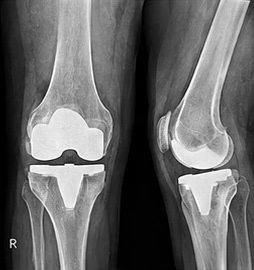
In a total knee replacement the worn joint surfaces are removed and resurfaced with metal components and a smooth medical-grade plastic insert. A hip replacement replaces the worn ball and socket in the same way.
Implants used at Kinkhab include the Triathlon (Stryker) and PFC Sigma (Johnson & Johnson) knee systems and dual-mobility hips. Dr. Parth explains which suits you, with your own X-rays on the screen.
Signs to look for
- Pain at rest and at night, not only on walking
- Walking distance shrinking to a few minutes
- Stiffness — difficulty climbing stairs or getting up from a chair
- A bow-legged or knock-kneed change in the leg
- Pain despite medicines, physiotherapy and injections
- Sudden severe pain and swelling with fever after a previous joint replacement
- A fall with sudden inability to stand on the leg
What causes it
The commonest reason is osteoarthritis — wear of the cartilage that cushions the joint. Rheumatoid arthritis, old fractures into the joint and loss of blood supply to the hip (avascular necrosis) are other causes.
How it is diagnosed
- 01Examination
Range of movement, alignment, stability and how you walk.
- 02Standing X-rays
The joint space and the alignment of the leg, taken while you stand.
- 03A plan you agree to
Replacement is offered only when the pain, the X-rays and a genuine trial of non-surgical care all point the same way.
Treatment options
- Weight management and quadriceps strengthening
- Physiotherapy and activity pacing
- Pain relief and, in selected cases, injections
- Footwear and walking aids
- Total knee replacement (TKR)
- Total hip replacement, including dual-mobility hips
- Revision of an earlier replacement, assessed case by case
Dr. Parth explains every option — including when surgery is not needed — before anything is decided.
Recovery, realistically
- Day 1
Standing and walking with support, usually the day after surgery or sooner.
- Weeks 1–2
Walking with a frame or sticks; exercises every day; the wound is checked.
- Weeks 6
Comfortable walking for most; driving and daily tasks return.
- 3 months – 1 year
The joint feels like yours at about three months and keeps improving for a year.
Questions patients ask
Am I too old for a knee replacement?
Age alone rarely decides it. Your general health, your pain and how much it limits your life matter more. Dr. Parth assesses this with you.
How long does a knee replacement last?
Modern implants commonly last many years. How long yours lasts depends on your weight, activity and bone quality; your surgeon will discuss what to expect.
Is joint replacement covered by insurance?
Planned joint replacement is usually covered by health insurance, sometimes after a waiting period. Kinkhab is cashless with 16 insurers and 9 TPAs — check your policy on our insurance page.
Should both knees be done together?
Sometimes, if both are badly affected and your health allows. Often they are done some weeks apart. This is decided individually.
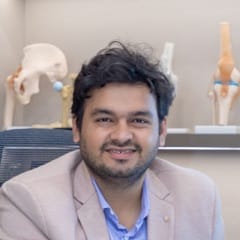
Dr. Parth Kinkhabwala
Orthopaedics & trauma · M.S. (Orthopaedics) · Gold Medallist · Reg. No. G-31649 · OPD-1
This page is general information to help you understand the condition. It is not a diagnosis — your surgeon will advise on your own situation.
You may also want to read
Arthritis is managed for years before it is ever operated on. Those years deserve a proper plan.
Read more →Orthopaedics · Dr. ParthPain management & rehabilitationSurgery is an event. Rehabilitation is the treatment — and it decides your result.
Read more →Orthopaedics · Dr. ParthKnee pain & instabilityThe knee takes several times your body weight on a staircase. When it hurts, everything shrinks — your walk, your work, your willingness to leave the house.
Read more →Talk it through with Dr. Parth.
OPD-1 · Corporate House, Station Road, Bharuch · Mon–Sat