Knee pain & instability in Bharuch
The knee takes several times your body weight on a staircase. When it hurts, everything shrinks — your walk, your work, your willingness to leave the house.
- Surgeon
- Dr. Parth Kinkhabwala
- Clinic
- OPD-1 · Mon–Sat
- OPD
- Take a live token · VIP ₹2,500
- Insurance
- Cashless · 16 insurers & 9 TPAs
What is it?
Knee pain is a symptom, not a diagnosis. It can come from cartilage, the meniscus, a ligament, a tendon, the way the kneecap tracks — or be felt in the knee from the hip or back.
Finding the right structure is the whole job. Most knees improve without surgery once the cause is clear.
Signs to look for
- Pain on stairs or squatting
- Swelling after activity
- Giving way or feeling unstable
- Locking or catching
- Morning stiffness
- Clicking with pain
- A hot, red, swollen knee with fever
- Unable to bear weight after an injury
- A knee that is locked and cannot straighten
What causes it
Common causes are osteoarthritis, meniscus tears, ligament injuries such as the ACL, kneecap problems and overuse of the tendons around the knee.
How it is diagnosed
- 01Examination
Alignment, kneecap tracking, ligament stability, meniscus signs and muscle strength.
- 02X-rays
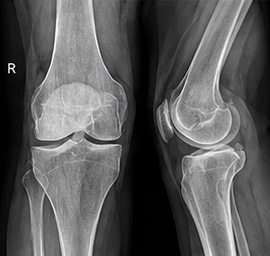
Joint space and alignment.
- 03MRI if needed
Only when the answer will change the plan.
Treatment options
- Activity and load modification
- Structured physiotherapy
- Medicines for pain and inflammation
- Injections where appropriate
- Braces or supports in selected cases
- Arthroscopy (keyhole surgery) for locking or a true mechanical block
- Ligament reconstruction for instability
- Partial or total knee replacement for end-stage arthritis
Dr. Parth explains every option — including when surgery is not needed — before anything is decided.
Recovery, realistically
- Weeks 1–2
Pain and swelling settle with the right plan.
- Weeks 6–8
Non-surgical programmes usually show clear change by now.
- After arthroscopy
Most return to desk work within about two weeks.
Questions patients ask
Do I need an MRI for knee pain?
Not always. Many knee problems are diagnosed by examination and X-rays. An MRI is used when its result would change the treatment.
Is walking good for knee pain?
Usually yes, at a level your knee tolerates. Your surgeon or physiotherapist will set the right amount.
When is knee surgery needed?
When a mechanical problem will not settle, when the knee is unstable, or when arthritis is severe and non-surgical care has truly failed.
Can knee pain come from the hip?
Yes. Hip problems often show up as knee pain, which is why the hip is always examined too.

Dr. Parth Kinkhabwala
Orthopaedics & trauma · M.S. (Orthopaedics) · Gold Medallist · Reg. No. G-31649 · OPD-1
This page is general information to help you understand the condition. It is not a diagnosis — your surgeon will advise on your own situation.
You may also want to read
Returning too early is the most reliable way to get injured again. Return is a test to be passed, not a date on a calendar.
Read more →Orthopaedics · Dr. ParthKnee & hip replacementA replacement is not a repair — it is an exchange. Done at the right time, it gives back the walk that arthritis took away.
Read more →Orthopaedics · Dr. ParthArthritis managementArthritis is managed for years before it is ever operated on. Those years deserve a proper plan.
Read more →Talk it through with Dr. Parth.
OPD-1 · Corporate House, Station Road, Bharuch · Mon–Sat